History
The story of the sheep, as the official record tells it
There is no single first day of sheep in Britain on this page, because the official record we can check does not begin there. What we do have is a living count, taken on 1 June, and the story of one sheep who changed science.
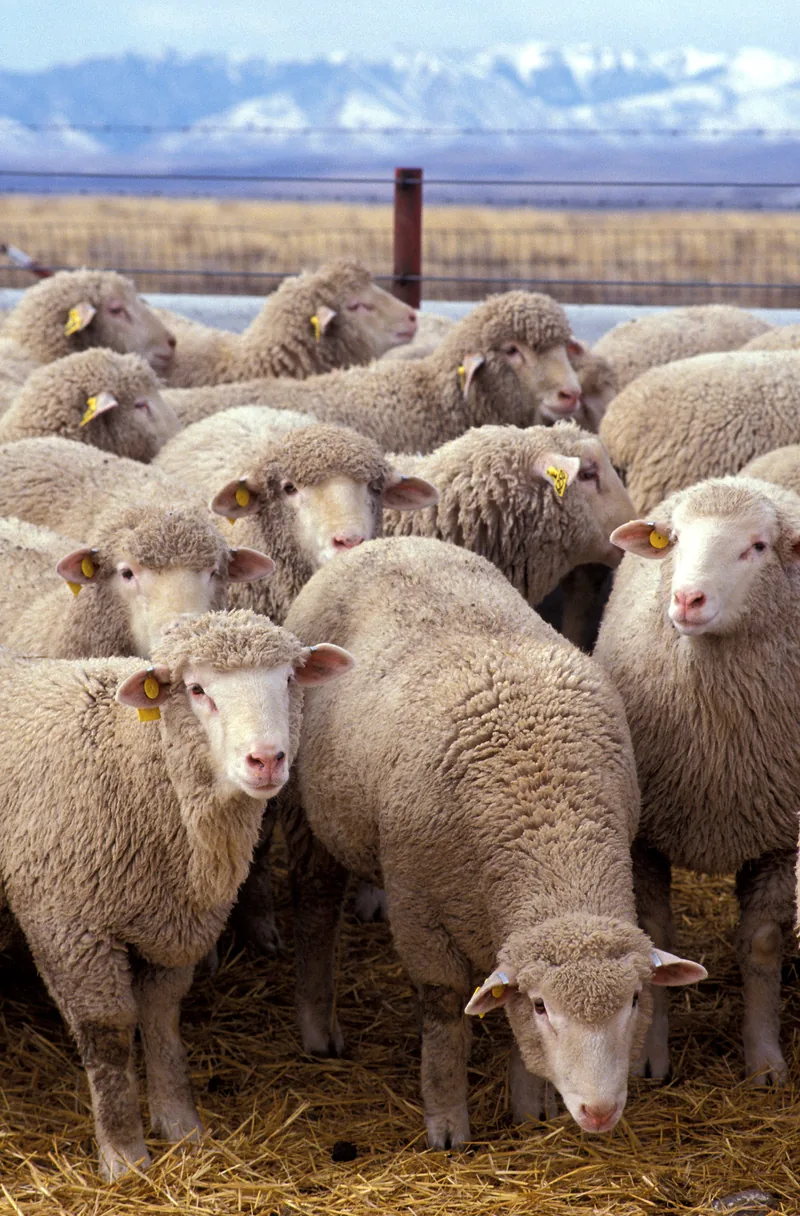
A 1 June count, not a year-round census
Official sheep figures in England come from the June Survey and relate to commercial holdings. Cattle figures in the same Defra livestock release come from the Cattle Tracing System and relate to all holdings. Those are two official methods, printed on the same page, and they are not treated here as one system. [source]
The June 2026 survey “was sent to a sample of 38 thousand commercial holdings and responses were received from 19 thousand holdings, representing a response rate of 50%.” Commercial holdings “are defined as those with more than five hectares of agricultural land, one hectare of orchards, 0.5 hectares of vegetables or 0.1 hectares of protected crops, or more than 10 cows, 50 pigs, 20 sheep, 20 goats or 1,000 poultry.” A flock of 19 sheep on a small holding is not, on that official definition, in the commercial survey. [source]
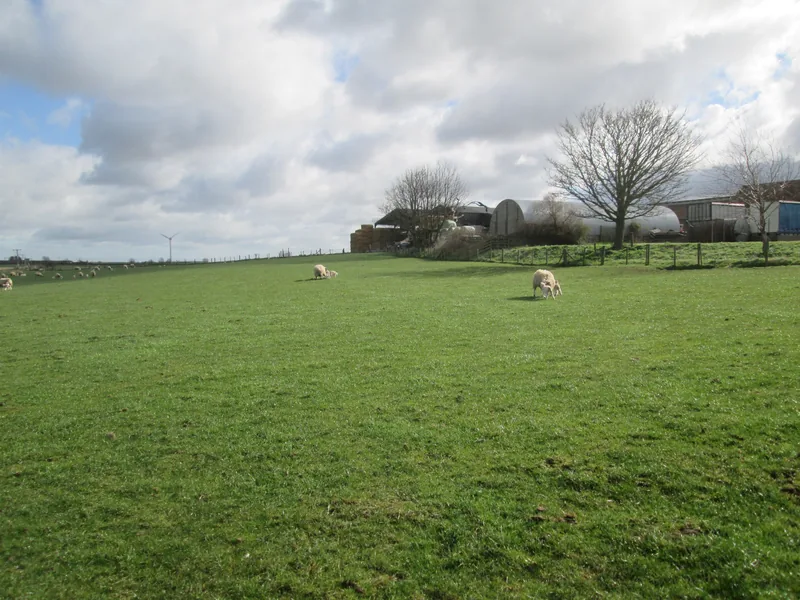
Two official columns, year after year
For as long as the published tables used here run, official sheep counts have been split into the female breeding flock, and other sheep and lambs, plus a total. In the United Kingdom release, those columns for 1 June 2025 are 14,779,632, 15,703,976 and 30,483,608. In the England release, the same shape of table for 1 June 2026 is 6,186,903, 6,852,731 and 13,039,634. [source] [source]
The United Kingdom release uses the rounded 14.8 million in more than one official sentence: once for the female breeding flock, and once, separately, for lambs. It is a twist almost too neat to invent, and it sits in the official record in plain sight.
A photograph is not a category
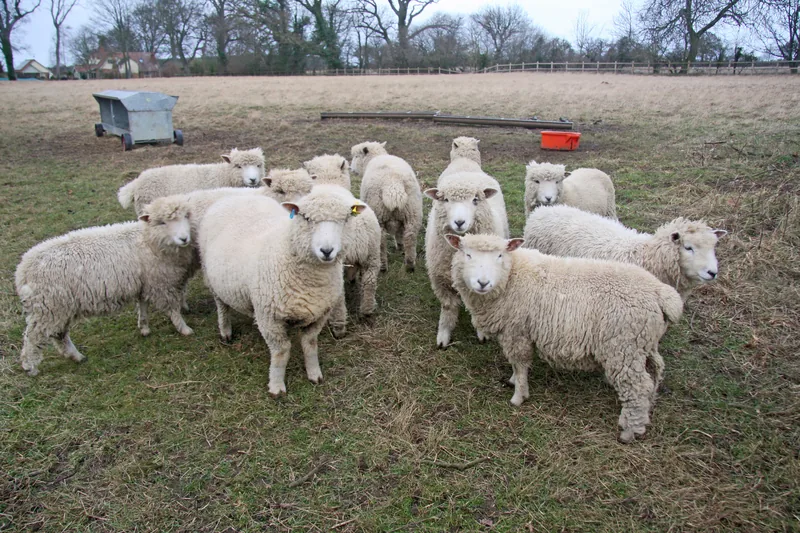
The winter flock at The Saxhams, Suffolk, is a real flock on a named day. The Commons file is titled “Ryedale”; the Commons category says Ryeland. The picture is a picture, with its own credit, not a line in the June Survey.
Dolly enters the record
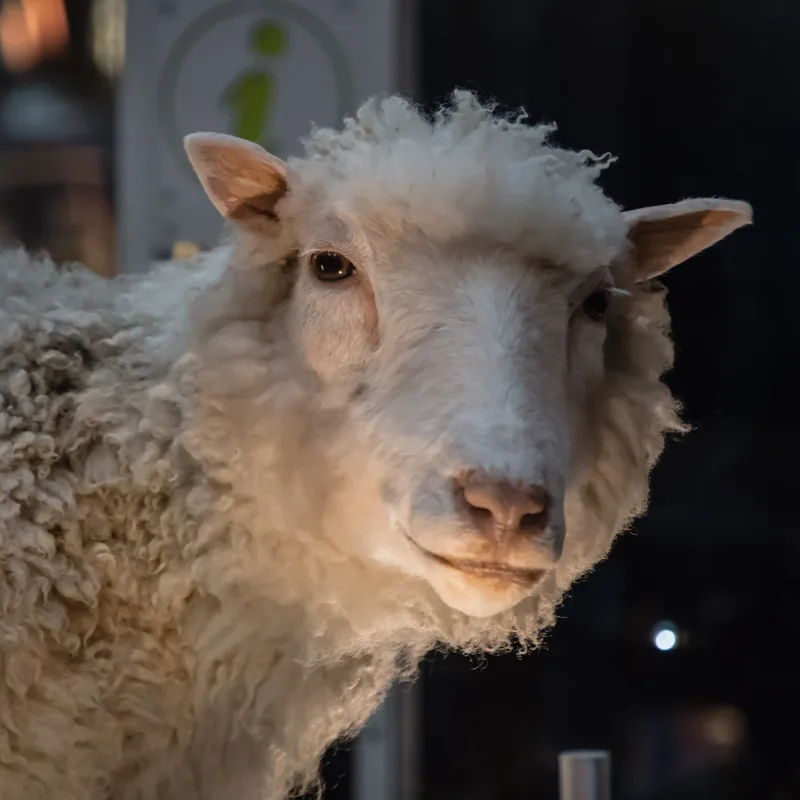
The Roslin Institute’s history is unusually careful. “Dolly was the first mammal to be cloned from an adult cell.” She “was not the first ever cloned mammal. That honour belongs to another sheep which was cloned from an embryo cell and born in 1984 in Cambridge, UK.” Megan and Morag “had also been cloned from embryonic cells grown in the lab at the Roslin Institute in 1995,” and “a further six sheep, cloned from embryonic and foetal cells, were born at Roslin at the same time as Dolly.” [source]
She was born on 5 July 1996, “cloned from a cell taken from the mammary gland of a six-year-old Finn Dorset sheep and an egg cell taken from a Scottish Blackface sheep,” and “born to her Scottish Blackface surrogate mother.” “Dolly’s white face was one of the first signs that she was a clone because if she had been genetically related to her surrogate mother, she would have had a black face.” She “was named after the country music singer Dolly Parton.” She was “announced to the world on 22 February 1997.” “In the week following the announcement, the Roslin Institute received 3,000 phone calls from around the world.” [source]
She “had a total of six lambs with a Welsh Mountain ram called David. Their first lamb, Bonnie, was born in April 1998.” In 2001 she “was diagnosed with arthritis,” “successfully treated with anti-inflammatory medication, although the cause of the arthritis was never discovered.” After her last lambs, in September 2000, “it was discovered that she had become infected by a virus called Jaagsiekte sheep retrovirus (JSRV), which causes lung cancer in sheep.” In February 2003 “she developed a cough. A CT scan showed tumours growing in her lungs and the decision was made to euthanise Dolly rather than risk her suffering. Dolly was put to sleep on 14 February 2003, at the age of six.” “After her death the Roslin Institute donated Dolly’s body to the National Museum of Scotland in Edinburgh.” [source]
The Institute’s own Cloning FAQs still say: “We do not clone animals any more. The technique has a very low success rate.” [source]
Enjoyed the flock?
No pop-ups. No intrusive advertising. Just interesting stuff. A little support helps the next farmyard site get built.