farmyard.im
The most famous sheep in the world was named after Dolly Parton
She was born on 5 July 1996, with a white face that told the scientists she was a clone. The Roslin Institute is careful about her place in history: she was “the first mammal to be cloned from an adult cell,” and “not the first ever cloned mammal.” After she died, “the Roslin Institute donated Dolly’s body to the National Museum of Scotland in Edinburgh,” where she has become one of the museum’s most popular exhibits.
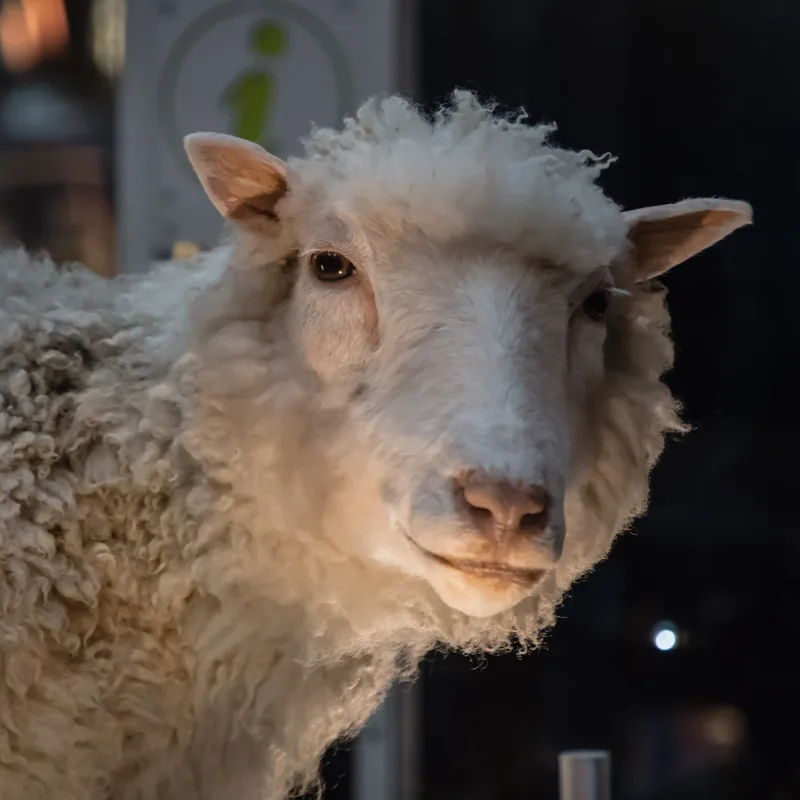
The photograph on this page was taken in 2017. It is a picture of Dolly as she is shown now, not of the lamb born at Roslin in 1996. A jumper was later knitted from her first fleece — 2.7kg of it, given to the Cystic Fibrosis Trust — designed by Holly Wharton and made by Steve Melia at Leeds in 1997. [source] [source]
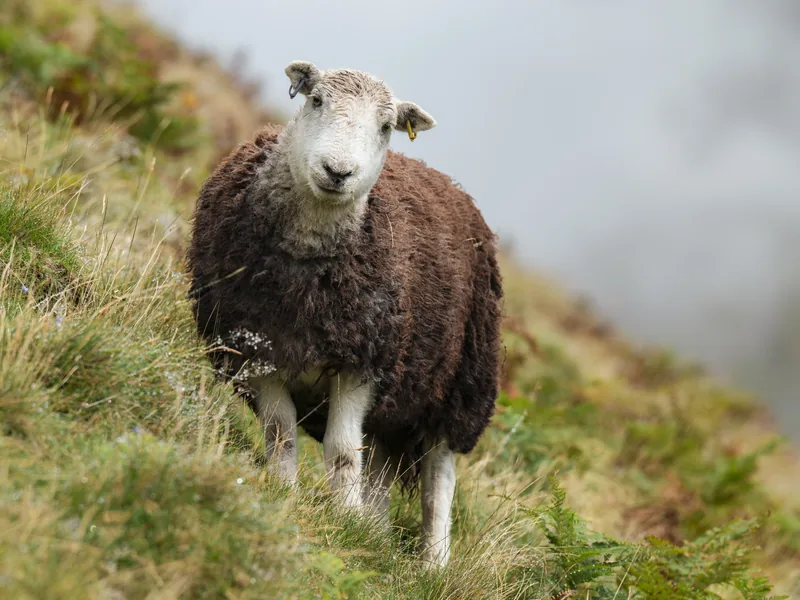
A Herdwick on Kirk Fell is one named animal, on one named hillside, on one August day. Across the United Kingdom, the official count for 1 June 2025 found just over 30 million sheep and lambs — a living landscape far larger than any one portrait can hold.
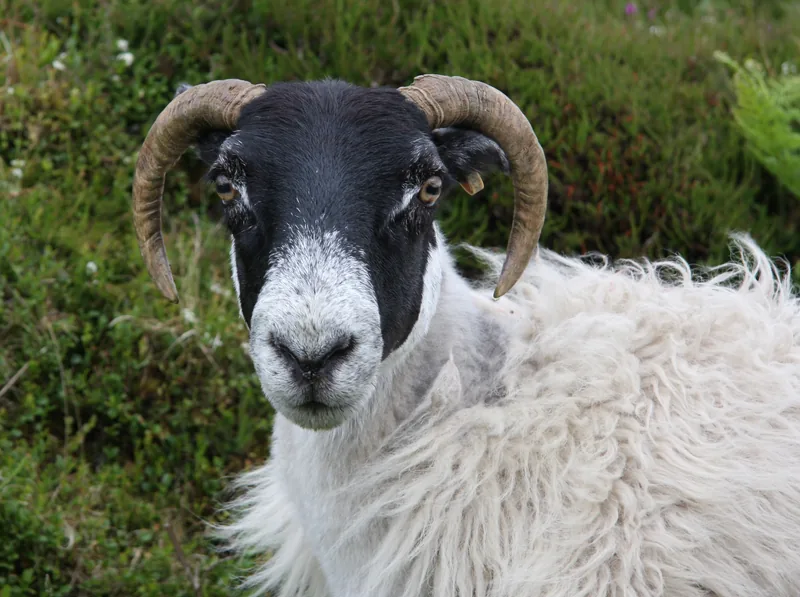
And here is a twist almost too neat to invent. In that same United Kingdom release, the rounded figure 14.8 million is used for the female breeding flock, which “decreased by 0.7% to 14.8 million,” and then used again, in a separate sentence, for lambs, which “account for the majority of other sheep & lambs and decreased by 2.9% to 14.8 million.” Two different kinds of sheep, one memorable number. [source]
Where to start
- Dolly The white face, the country singer, the jumper, and the Institute that no longer clones animals.
- Discoveries Strange and wonderful things from the official record and the hillside photographs.
- The flock desk How Britain counts its sheep, and why 14.8 million appears twice.
- England and the UK Two official counts, a year apart, side by side.
- Facts A long file of figures, stories and photograph notes.
- Myths versus facts What people assume, and what the record actually says.
- A quiz and a timeline Test yourself on Dolly, the flock, and a few surprises.
- Free fact sheets Three typographic PDFs, in A4 and Letter, with no photographs inside.
Keep exploring
Enjoyed the flock?
No pop-ups. No intrusive advertising. Just interesting stuff. A little support helps the next farmyard site get built.