For families
Fourteen point eight million, twice, and a sheep named after a singer
A gentler way into two of the best stories here: an official number that is used for two kinds of sheep, and a famous sheep who was not, officially, the first cloned mammal.
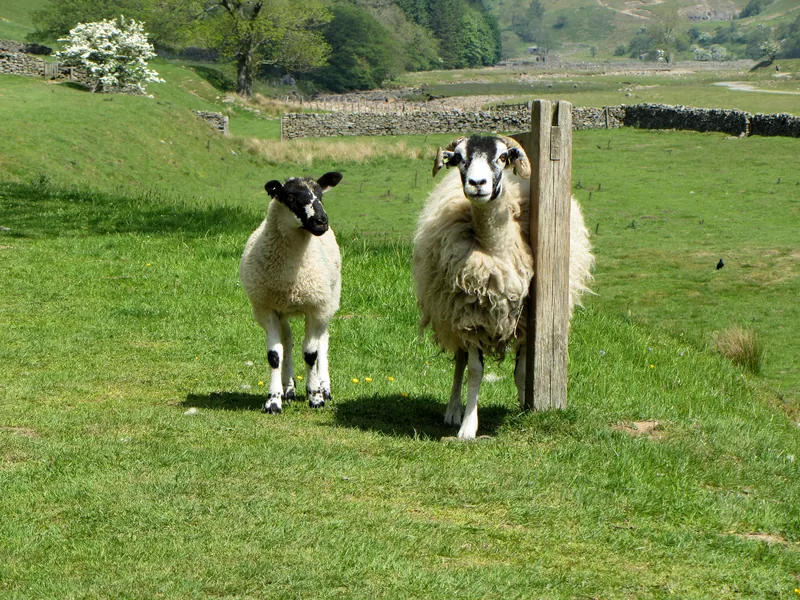
On the official United Kingdom page for 1 June 2025, the female breeding flock is said to be 14.8 million. On the same official page, lambs are also said to be 14.8 million. They are not the same official group. Lambs, the page says, “account for the majority of other sheep & lambs.” “Other sheep and lambs” is a bigger official box, 15.7 million in that year. [source]
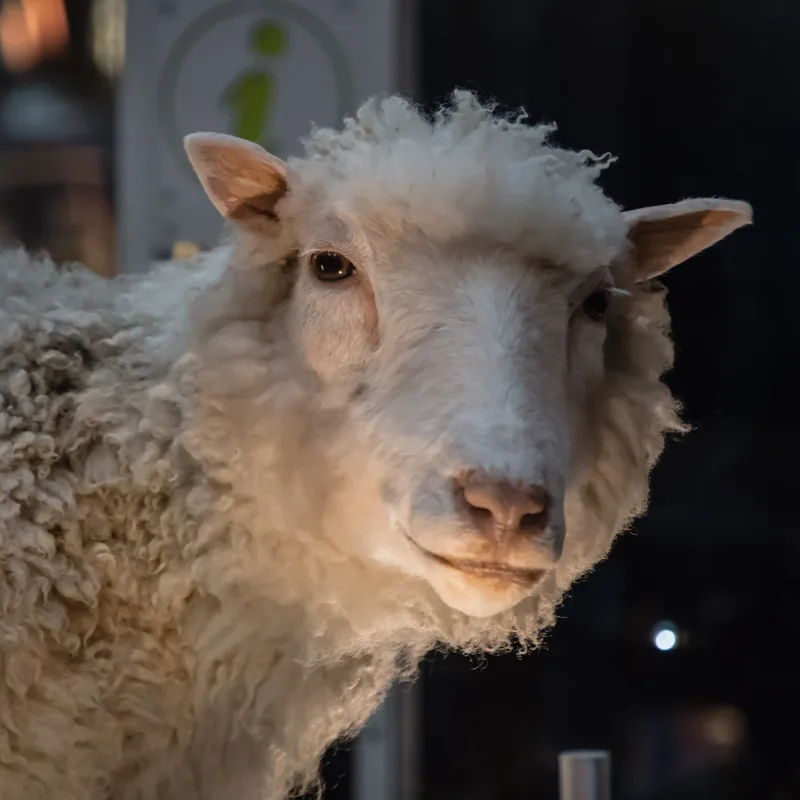
Dolly was born on 5 July 1996. The scientists who made her say she was “the first mammal to be cloned from an adult cell,” and “not the first ever cloned mammal.” Another sheep, cloned from an embryo cell, had been born in Cambridge in 1984. Dolly had a white face, which was “one of the first signs that she was a clone,” because her surrogate mother was a Scottish Blackface sheep and would have given her a black face. She “was named after the country music singer Dolly Parton.” [source]
She had six lambs. The first was called Bonnie, born in April 1998. After Dolly died, on 14 February 2003, “the Roslin Institute donated Dolly’s body to the National Museum of Scotland in Edinburgh.” A jumper was knitted from her first fleece, from a design by Holly Wharton in a competition called “Do a Design for Dolly,” and 2.7kg of that fleece was donated to the Cystic Fibrosis Trust. [source] [source]
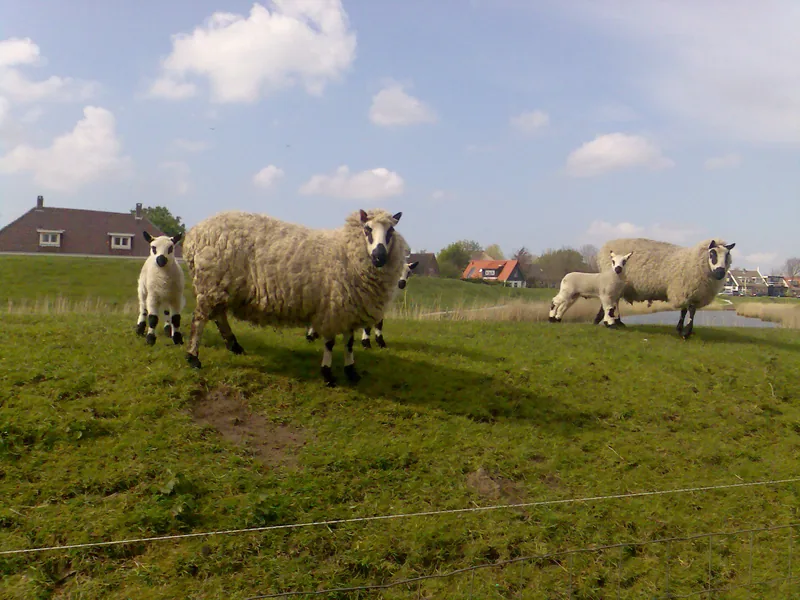
The Kerry Hill ewes and lambs, the Herdwick on Kirk Fell, and the Swaledale on Dartmoor are all named breeds in named, or sometimes unnamed, places. They are not official totals. Official totals come from a survey of commercial holdings, counted at 1 June. A picture of two ewes and their lambs is still only a picture of two ewes and their lambs.
If you want to test the official wording, there is a quiz. If you want the dates in order, there is a timeline. If you want the official pages themselves, they are listed on the sources page.
Enjoyed the flock?
No pop-ups. No intrusive advertising. Just interesting stuff. A little support helps the next farmyard site get built.