Home · Lambs, or other sheep and lambs?
The signature desk
Lambs, or other sheep and lambs?
Official statistics still give careful names to parts of a sheep flock. They do not always use “lambs” and “other sheep and lambs” as if those words meant the same thing, and they do not always cover the same year or the same part of the country.
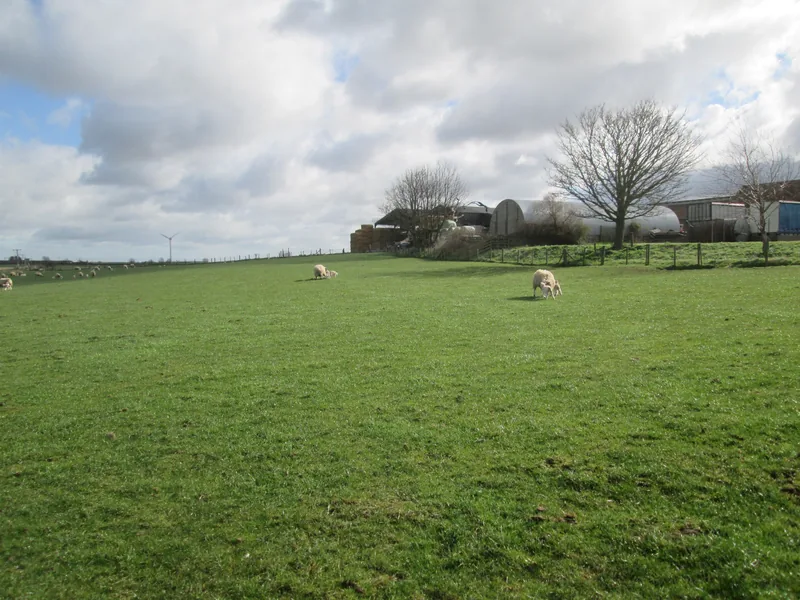
Official statistics still split a sheep flock into a female breeding flock, and into other sheep and lambs. They also, in places, give a figure for lambs. Those official names are kept unblended here, and so are England and the United Kingdom.
Official Defra releases split the sheep flock into two named categories: the “female breeding flock,” and “other sheep and lambs.” Those are two official lines, not one total given twice. [source] [source] [source]
In Livestock populations in the United Kingdom at 1 June 2025, the 2025 table gives 14,779,632 in the female breeding flock, 15,703,976 other sheep and lambs, and a total of 30,483,608. [source]
The same release says, in rounded official sentences, that the female breeding flock decreased by 0.7% to 14.8 million and that “other sheep & lambs fell by 2.7% to 15.7 million animals.” [source]
The rounded “14.8 million” also appears in a sentence about lambs. This desk keeps the table lines, and the official sentences, in their own categories.
The United Kingdom release for 1 June 2025 is careful to keep “lambs” and “other sheep and lambs” from becoming the same figure. It says: “Lambs account for the majority of other sheep & lambs and decreased by 2.9% to 14.8 million. They continue to make up almost half of the total sheep population in 2025.” [source]
An opening summary in the same release says the total number of sheep and lambs decreased by 1.7% to 30.5 million, and that “the reduction in flock size was mostly due to a 2.9% decrease in the number of lambs which account for almost half of all sheep and fell to 14.8 million in 2025.” [source]
So, in that official United Kingdom wording, lambs are the majority of “other sheep and lambs,” not the whole of that category, and 14.8 million lambs is not the same official line as 14.8 million in the female breeding flock.
The England release for 1 June 2026 also uses the word “lambs.” It says: “The number of lambs decreased by 0.5% to 6.5 million.” Its published table, on the same page, labels the second column “Other sheep and lambs” and gives 6,852,731 for 2026. [source]
Those two official England figures are not treated here as one number rounded two ways. The 2026 England page does not, in the table quoted here, publish a separate line for lambs alone.
Defra’s release Livestock populations in England at 1 June 2026 is for England, and for a later year than the 2025 United Kingdom figures. The two must not be added, subtracted, or treated as one series. [source]
The release says the total number of sheep and lambs decreased by 2.0% to 13.0 million in June 2026, that the female breeding flock fell by 3.7% to 6.2 million, and that “lambs also saw a fall of 0.5% to 6.5 million.” Later it repeats: “The number of lambs decreased by 0.5% to 6.5 million. The female breeding flock also saw a decrease in 2026, falling by 3.7% to 6.2 million sheep.” It also says: “Lambs account for half of all sheep with the female breeding flock accounting for a further 47%.” [source]
The table published with that release gives the 2026 female breeding flock as 6,186,903, other sheep and lambs as 6,852,731, and the total as 13,039,634. [source]
Livestock populations in the United Kingdom at 1 June 2025, and Chapter 2 of Agriculture in the United Kingdom 2025, are United Kingdom sources for 2025, not England in 2026. [source] [source]
The United Kingdom livestock release gives the 2025 table figures above, the rounded sentences for 30.5 million sheep and lambs, 14.8 million in the female breeding flock, 15.7 million other sheep and lambs, and 14.8 million lambs. [source]
Figure 2.2b in Agriculture in the United Kingdom 2025, “Sheep numbers (thousand head),” gives 2025 as 14,780 thousand in the female breeding flock, 15,704 thousand other sheep and lambs, and a total of 30,484 thousand. The livestock section of that chapter says the female breeding flock decreased by 0.7% to just under 15 million, that other sheep and lambs were just under 16 million (down 2.7%), and that the total UK sheep and lamb population was 30 million, down 1.7%. [source]
Those thousand-head table figures match the United Kingdom livestock table when rounded. This desk does not turn either official 2025 United Kingdom total into an England figure.
Unlike the cattle figures in the same England release, the sheep figures are not taken from the Cattle Tracing System. The England release says: “All figures relate to commercial holdings apart from the cattle figures which relate to all holdings as these data are sourced from the Cattle Tracing Scheme.” [source]
The figures “relate to animals on farm on 1 June and not capacity.” The June 2026 survey was sent to a sample of 38 thousand commercial holdings. Commercial holdings are defined as those with more than five hectares of agricultural land, one hectare of orchards, 0.5 hectares of vegetables or 0.1 hectares of protected crops, or more than 10 cows, 50 pigs, 20 sheep, 20 goats or 1,000 poultry. [source]
The United Kingdom 2025 livestock release says results are sourced from the June Surveys run in each country. [source]
This desk is not a single “how many sheep are there?” number for the British Isles, and it is not a count of lambs that treats “other sheep and lambs” as if those words meant only lambs.
It is not a guide to lambing, breeding, shearing or wool weights, and it does not invent an official 2026 England total for lambs alone from the “other sheep and lambs” table line.
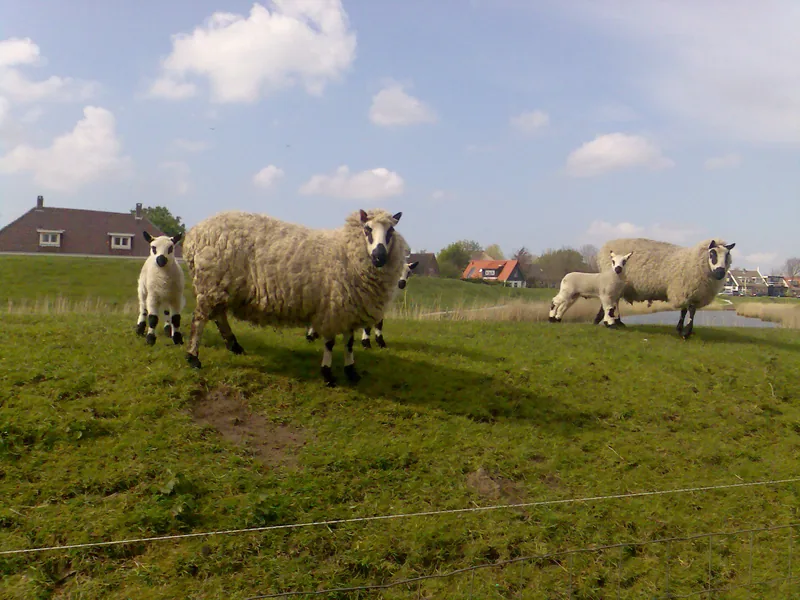
Photographs of ewes, lambs and flocks are shown with the place and the date that can be verified, and are not treated as official counts.
Three quick checks
Each answer is taken from the official wording on this desk.
In the United Kingdom release for 1 June 2025, lambs are officially described as…
The Defra table for livestock populations in England at 1 June 2026 labels its second sheep column…
Sheep figures in the England release for 1 June 2026 relate to…
Enjoyed the flock?
No pop-ups. No intrusive advertising. Just interesting stuff. A little support helps the next farmyard site get built.